Don’t Ship Homegrown Produce into California
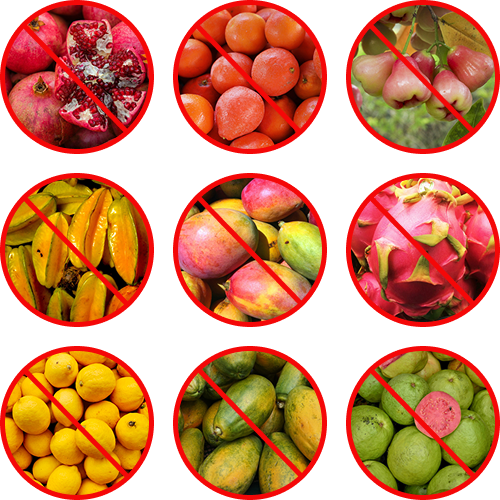
Help Protect Your Community from Invasive Pests
Invasive pests can hitchhike into your community through infested homegrown fruits and veggies shipped from other states or countries. These destructive pests can ruin homegrown produce in your neighborhood and agriculture statewide.
While it might seem harmless to ship homegrown produce or other natural materials across state lines, purchasing these items from unverified online marketplaces, or shipping or receiving them from friends and family, can have severe consequences. This produce could unintentionally spread destructive non-native pests, such as invasive fruit flies, and plant diseases. Infested produce does not always look damaged from the outside as invasive fruit flies lay eggs under the skin, where the feeding larvae (maggots) feed, making it inedible.
To help protect your community from invasive pests, residents are urged to take simple precautions, including:
- Please do not purchase homegrown produce online.
- Please don’t ship homegrown produce or other natural materials into California from other states or countries.
- Keep it Local. Only buy produce from local, licensed retailers.

California residents can also help prevent the spread of invasive species by:
- Learning more about invasive plant pest and disease quarantines and regulations in your area.
- Helping agricultural officials by allowing them access to your garden to place traps, inspect plants, conduct necessary treatments or remove potentially infested produce or plants.
- Reporting signs of invasive pests to the California Department of Food and Agriculture at 1-800-491-1899 or to your local county agricultural commissioner’s office
- Please Don’t Pack a Pest when traveling or shipping/receiving packages.
What Not to Ship into California:
- Homegrown fruits and vegetables
- Plants, seeds, soil, wood and sand
- Oils, meats, coffee and dairy products
Together, we can help keep California free of invasive pests.
Learn more about invasive fruit flies and other destructive pests threatening California agriculture.